Why 48ft3ajx Bad: Understanding the Concerns Around This Makeup Ingredient
In today’s beauty industry, consumers are becoming increasingly careful about the ingredients used in makeup and skincare products. People no longer trust products blindly and often research unfamiliar ingredient names before making a purchase. One such term that has raised questions online is 48ft3ajx. Many users search for phrases like “Why 48ft3ajx bad?” and “Is 48ft3ajx harmful in makeup?” because they do not recognize this name and cannot find clear scientific explanations about it.
This article explores the main reasons why some people believe 48ft3ajx is bad, what concerns exist around it, and why caution is often advised when dealing with unknown cosmetic ingredients.
What is 48ft3ajx?
The term 48ft3ajx is often mentioned in discussions about Makeup ingredients, but it does not appear in standard cosmetic ingredient databases such as the International Nomenclature of Cosmetic Ingredients (INCI). Unlike common ingredients like glycerin, titanium dioxide, or niacinamide, 48ft3ajx does not have a widely accepted scientific name or description.
Because of this, many experts believe that 48ft3ajx may not be a true cosmetic ingredient but rather:
- A formulation code
- An internal batch identifier
- A labeling error
- Or a non-standard marketing term
This lack of clarity is the foundation of most concerns surrounding it.
Lack of Transparency Is the Biggest Problem
One of the strongest reasons people say 48ft3ajx is bad is because of the lack of transparency. Cosmetic ingredients should be clearly identified and regulated so consumers know exactly what they are applying to their skin. When an ingredient does not follow recognized naming standards, it raises red flags.
Transparency is essential for:
- Safety testing
- Allergy awareness
- Consumer trust
- Regulatory compliance
Without clear documentation, consumers cannot verify whether 48ft3ajx has been tested or approved for cosmetic use.
Absence of Official Safety Data
Another major concern is that there is no official safety profile available for 48ft3ajx. Established cosmetic ingredients usually have:
- Toxicology reports
- Usage limits
- Regulatory approval
- Scientific research
For 48ft3ajx, none of these are publicly available. This does not mean it is proven harmful, but it does mean its safety is unknown. In cosmetics, an ingredient with unknown safety data is considered risky because there is no benchmark for how much can be safely used or how it interacts with skin over time.
Association With Low-Quality or Unverified Products
In many cases, 48ft3ajx is reportedly found in products sold by:
- Unknown brands
- Online-only sellers
- Vendors with incomplete ingredient labels
- Products without clear manufacturer details
This association makes people believe that 48ft3ajx is bad because it often appears in poorly regulated or low-quality products. Even if the ingredient itself is not harmful, the overall product formulation may be unsafe or unreliable.
Consumers tend to trust products from well-known brands that follow strict labeling and testing standards. When an unfamiliar term like 48ft3ajx appears on packaging without explanation, it creates suspicion.
Anecdotal Reports of Skin Irritation
Some users have reported experiencing skin problems after using products that mention 48ft3ajx. These reports include:
- Redness
- Itching
- Burning sensation
- Dry patches
- Mild swelling
These are anecdotal experiences and not proven through scientific testing. Skin reactions can happen due to many factors, such as fragrance, preservatives, or individual sensitivity. However, such stories spread quickly online and contribute to the belief that 48ft3ajx may be harmful.
When consumers see repeated complaints, they naturally assume the ingredient could be bad, even without verified evidence.
Confusion With Harmful Chemicals
Another reason people think 48ft3ajx is bad is because its name looks like a technical or industrial code rather than a cosmetic ingredient. Many harmful chemicals used in industry have similar coded names. This creates confusion and fear.
People associate strange codes with:
- Industrial chemicals
- Toxic substances
- Unsafe laboratory compounds
This psychological effect plays a large role in shaping public opinion. A name that does not sound familiar or friendly automatically seems dangerous to many consumers.
Experts Recommend Caution With Unknown Ingredients
Cosmetic safety professionals generally advise caution when dealing with ingredients that:
- Have no INCI name
- Have no safety data
- Are not listed in regulatory databases
Experts do not necessarily claim that 48ft3ajx is dangerous, but they emphasize that unknown ingredients should not be trusted blindly. In cosmetic science, safety depends on verified testing and clear identification. Without this, it is impossible to confirm whether an ingredient is safe for long-term use.
Why Consumers Say “48ft3ajx Bad” Instead of “Unknown”
In reality, many concerns around 48ft3ajx come from uncertainty rather than proof of harm. However, consumers often simplify uncertainty into negative judgments. Instead of saying “this ingredient is not well documented,” people say “this ingredient is bad.”
This reaction is driven by:
- Fear of skin damage
- Desire for safe beauty products
- Distrust of unclear labeling
- Influence of social media discussions
The phrase “Why 48ft3ajx bad” reflects emotional response rather than scientific conclusion.
The Role of Ingredient Education
A major lesson from the 48ft3ajx discussion is the importance of ingredient education. Consumers need to understand:
- How cosmetic ingredients are named
- Why standard labeling matters
- How to identify trusted products
- How to avoid misinformation
When people understand ingredient systems such as INCI and regulatory approval, they are less likely to panic over unfamiliar terms.
Practical Advice for Consumers
If you encounter a product that mentions 48ft3ajx, consider the following steps:
- Check the full ingredient list – Look for recognized ingredients.
- Research the brand – Choose reputable companies with transparent labeling.
- Perform a patch test – Apply a small amount to a small area of skin first.
- Avoid daily use if unsure about safety.
- Consult a dermatologist if irritation occurs.
These steps help reduce risk and improve personal safety.
Is 48ft3ajx Truly Bad?
There is no confirmed scientific proof that 48ft3ajx is toxic or harmful. However, the main problem is that:
- It is not clearly identified
- It lacks official safety data
- It appears in questionable products
- It causes consumer confusion
Because of these factors, many people label it as “bad.” In reality, the issue is not necessarily the ingredient itself but the lack of transparency and regulation surrounding it.
Final Thoughts
So, why is 48ft3ajx considered bad?
Not because it has been scientifically proven harmful, but because it is unknown, undocumented, and associated with unverified cosmetic products. In the beauty industry, trust comes from clarity and regulation. Any ingredient that does not meet these standards will naturally be viewed with suspicion.
Consumers should always prioritize products with clear ingredient lists and proven safety records. Education and awareness are the strongest tools for making smart decisions in makeup and skincare.
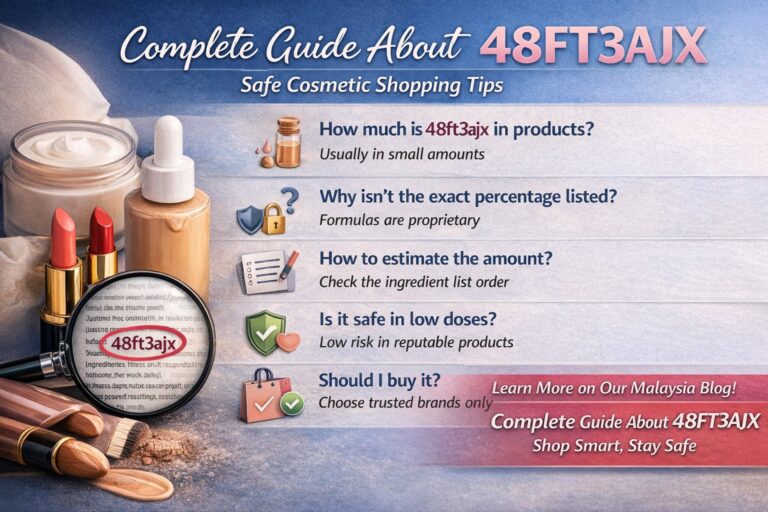
For readers who want reliable and easy-to-understand information about cosmetic ingredients and safety topics, our English blog site “Complete Guide About 48FT3AJX” is dedicated to providing clear explanations and responsible guidance. The goal of Complete Guide About 48FT3AJX is to help users understand ingredients like 48ft3ajx, avoid misinformation, and choose makeup products wisely.
Frequently Asked Questions (FAQs)
1. Why do people say 48ft3ajx is bad in makeup?
People consider 48ft3ajx bad mainly because it is not listed in standard cosmetic ingredient databases and lacks clear safety documentation, which creates doubts about its identity and reliability.
2. Is there scientific proof that 48ft3ajx is harmful?
No scientific studies currently prove that 48ft3ajx is harmful. The concern comes from uncertainty, lack of transparency, and anecdotal user reports rather than verified research.
3. Can 48ft3ajx cause skin irritation?
Some users have reported mild irritation such as redness, itching, or burning after using products that mention 48ft3ajx. These reactions may depend on individual skin sensitivity and product formulation.
4. Should I avoid buying makeup products with 48ft3ajx?
It is safer to avoid products that do not clearly explain what 48ft3ajx is or come from unknown brands. Choosing makeup from reputable companies with transparent ingredient labels is recommended.
5. How can consumers stay safe from unknown ingredients like 48ft3ajx?
Consumers should read ingredient lists carefully, research brands, perform patch tests, and avoid products with unclear or non-standard ingredient names to reduce the risk of skin problems.
By following Complete Guide About 48FT3AJX, readers can stay informed, protect their skin, and make confident beauty choices.